T-Rex Hockey

Youth Hockey Pathways

From local teams and sport schools to junior and college. Compare playing opportunities, school, everyday life and full-season costs to find the right next step.

Explore the pathway

From youth to college: three stages

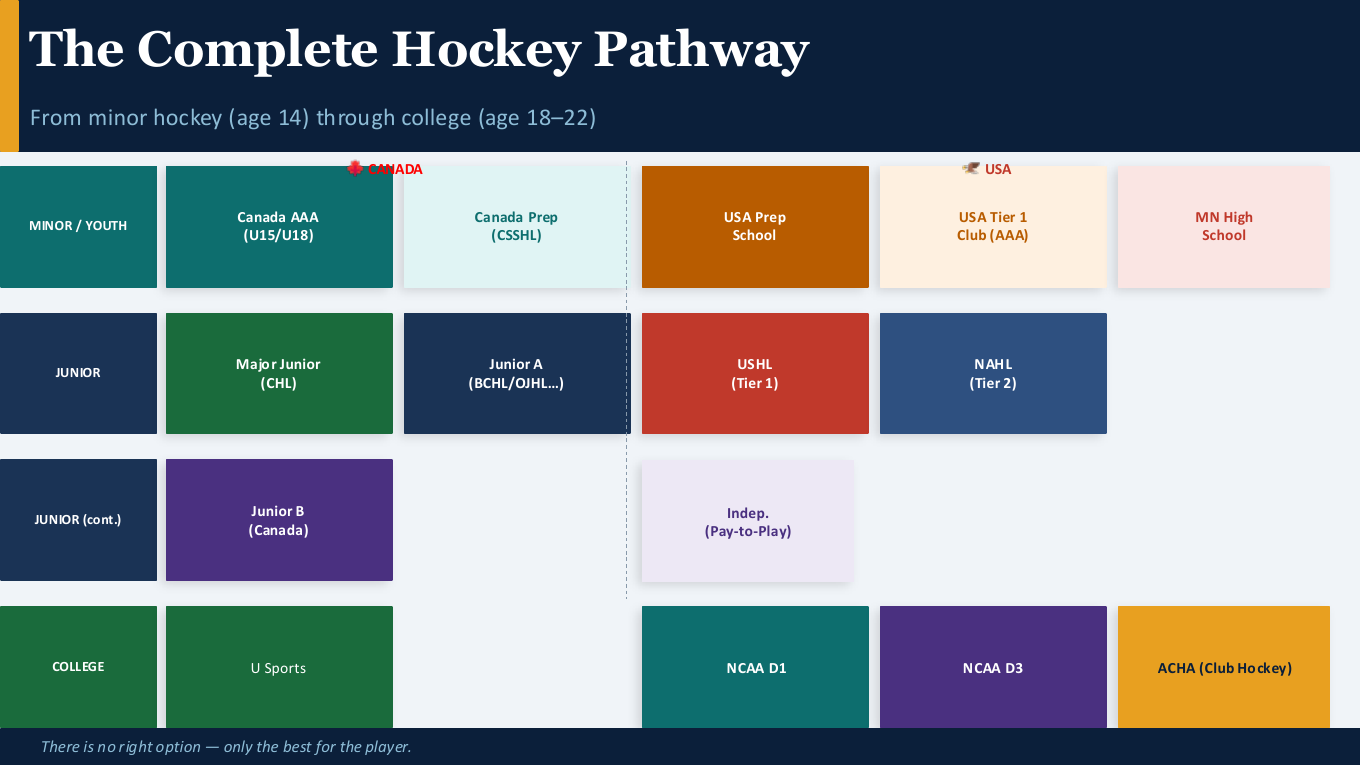
This map shows options, not a ladder everyone has to climb. A player can stay local, change school models or keep playing at college through a club.

  1. Youth hockeyFind a team where your child can play and learn
  2. Junior hockeyCompare the role, not just the league name
  3. College and universityAsk about admission, roster, eligibility and aid separately

Youth hockey

More than one model can suit the same player. Compare coaching, expected game opportunities and schooling before weighing labels such as AAA or prep. Confirm age groups with the local association for the relevant season.

Local Canadian hockey

A player attends their regular school and joins a community or competitive team, including AAA where offered. This can be a useful way to assess practice and game opportunities in a familiar setting.

Ask the program: How often will they be on the ice, and how far are the longest away trips?

CSSHL sport schools

School and hockey are coordinated. Day and boarding options, tuition and facilities vary by program.

Ask the program: Who handles classes, training and housing?

U.S. prep and high school hockey

The school is part of the hockey model, but prep schools and public high school teams work differently. Minnesota high school hockey is one regional example, not a nationwide model.

Ask the program: Is school admission required first? How do team selection and the season work?

U.S. Tier 1 youth clubs

This is a youth club category, not Junior Tier I. Confirm how the club schedule and the player’s school will work together.

Ask the program: How many school days are affected by travel, and who handles missed classes?

Junior hockey

Junior hockey is not a required step. Two similar-looking invitations can come with different playing roles, housing arrangements and charges. These are examples from the seminar, mostly from the men’s junior system; check women’s programs and schools separately.

CHL / Major Junior

The CHL comprises the WHL, OHL and QMJHL. Ask the club what education and billet support it provides and what the written terms say.

Ask the program: Who coordinates school, and when can education benefits be used?

Canadian Junior A / B

The labels are a starting point, not a uniform fee or an automatic route to college. Check current league affiliation, local schooling, player role and housing.

Ask the program: Who governs the league this season, and can the player keep their school arrangement?

USHL / NAHL / NA3HL

These are examples of Tier I, II and III in USA Hockey junior hockey. Do not apply those labels to other systems or use them to infer the total bill.

Ask the program: Who pays for training, billets, meals and transportation?

BCHL, NCDC and other programs

The BCHL operates independently. The USPHL’s NCDC, Premier and Elite are distinct divisions. Don’t assume the same tier labels or fees apply; read the actual team’s calendar, registration terms and agreement.

Ask the program: Is the invitation a tryout or a roster commitment, and what are the refund terms?

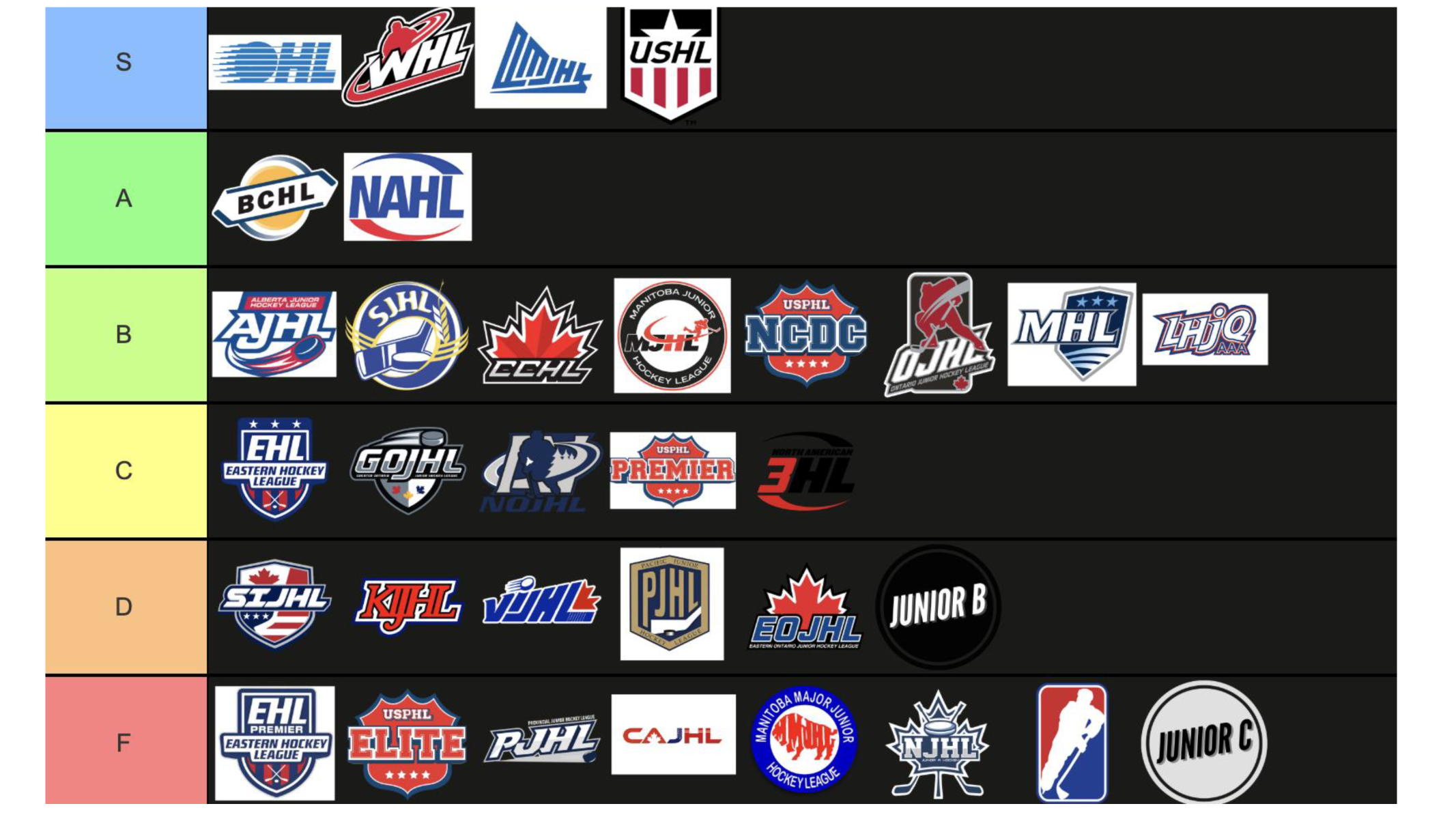
View the seminar’s league chart

This teaching graphic was used for the 2026 seminar. It is not an official ranking. The S–F bands do not map to a governing body’s tiers, current costs or eligibility.

Seminar illustration showing logos from different junior leagues
Seminar illustration: selected junior leagues. The CHL and U.S. leagues such as the USHL and NAHL belong to different systems and should be checked separately.

College and university

Start with schools the player would want to attend. Coach interest, school admission, athletics eligibility and net cost are four different decisions.

U SPORTS

A Canadian university varsity option. Confirm the degree program, roster process and financial support with the school.

Ask the program: Who handles coaching, admission and financial aid?

NCAA Division I

Check academic and athletics eligibility. Athletic aid may be available; ask for the amount, renewal terms and remaining family costs in writing.

Ask the program: How will the school review initial full-time enrolment and prior playing history?

NCAA Division III

Division III does not offer athletic scholarships. Academic and need-based aid may be available. International students should check the applicable eligibility certification.

Ask the program: What would the net cost be without an athletic scholarship?

ACHA college club hockey

ACHA offers non-NCAA collegiate hockey. Club tryouts, dues and time commitments vary, and it can be a choice in its own right.

Ask the program: How are players selected, and what are the dues, practice load and travel?

How to compare two offers

Compare the answers from two actual teams rather than trying to rank the league names. Treat an unanswered question as unconfirmed, not as a promise.

Playing and development
What position, role and game opportunities do you expect for the player?
Get in writing: The feedback process, practice plan and roster status.
School
Where does the player attend class, and who handles travel conflicts with exams?
Get in writing: A course timetable, missed-class policy and school contact.
Actual schedule
What do a normal week and a travel week actually look like?
Get in writing: A calendar that includes training, travel, commuting and rest.
Housing and supervision
Who arranges housing, and whom do we contact if the placement isn’t suitable or the player is injured?
Get in writing: A housing agreement, emergency contact and process for changing placements.
Full-season net cost
What is billed beyond registration? What happens after withdrawal, injury or a roster cut?
Get in writing: An itemized quote by currency, payer and refund terms.
Eligibility and next steps
Could changing teams, signing an agreement or enrolling early affect future eligibility?
Get in writing: Written guidance for the individual case from the target school or league.

Budget for the full season

Compare quotes for the same season and the same categories. Keep CAD and USD separate and use one exchange-rate date. Don’t subtract school or team aid until it is confirmed.

Net cost = fixed fees + variable costs such as travel + a contingency − aid confirmed in writing

Registration and training
Team fees, tryouts, extra coaching and ice time
Equipment
Initial kit, fitting, sharpening and replacements
Home and away travel
Transport, hotels, meals and accompanying family costs
School and housing
Tuition, academic support, housing, meals and deposits
Insurance and contingencies
Verify sports and cross-border coverage, deductibles and emergency costs
Aid and currencies
Subtract only confirmed aid; list CAD and USD separately

Parent Questions

Choosing a level and a team

Is hockey worth continuing without a professional goal?

Yes. Look at whether your child wants to be on the ice, responds to the coaching and still has time for school, rest and family. Community hockey is a valid long-term choice.

How can I tell if a team is a good fit?

Ask the coach about current strengths, what to work on next and the likely role in the team. Watch a full practice if possible, then ask whether your child understood the coaching and would want to come back.

How do AAA and hockey prep schools differ?

AAA usually describes a competition category. Prep or sport school describes how education and hockey are organized. A program can have both features. Compare who teaches, who schedules games and whether boarding is required.

How do I find the right age group?

Check the season-specific divisions with the local association, then ask about birth years, registration boundaries and tryouts. Canadian and U.S. youth labels and cutoffs differ; don’t reuse the seminar’s old birth-year tables.

Does girls’ hockey follow the same junior map?

No. The seminar’s junior tier image mainly shows examples from the men’s system. Look for local girls’ youth and school programs, then check women’s varsity or club options at schools of interest.

School and everyday life

How should we compare Canadian and U.S. programs?

Compare two actual calendars, fee schedules and class timetables. Ask where your child is more likely to receive feedback, play regularly and keep up with schoolwork.

How can we balance a demanding hockey schedule with school?

Map a regular week and a travel week, leaving time to commute, eat, study and sleep. Use both schedules to ask the school what happens when travel conflicts with a required class or exam.

Where do junior players study and live?

Arrangements vary. Ask who handles credits and transcripts, how billets are arranged and supervised, what the commute looks like, and who to call in an emergency. Meet the host and review the agreement before deciding.

What should we check before playing or studying abroad?

Separate short competition trips from longer study plans. Verify entry, enrolment, housing, supervision and registration with the school and relevant authorities. A team invitation isn’t school admission or permission to enter a country.

Costs, coverage and commitments

What belongs in a full-season budget?

Budget for registration and training, equipment and upkeep, away travel and hotels, housing or tuition, insurance and contingencies. Track each currency separately and subtract only confirmed aid. Check what is non-refundable.

Does free-to-play mean no out-of-pocket costs?

No. Ask who pays for billets, meals, gear, insurance, travel and schooling. For subsidies, ask when they are paid, what conditions apply and how they are settled if the player leaves.

Does a tryout invitation mean a roster spot?

No. Distinguish an invitation, paid camp, tryout list, waitlist and confirmed roster spot. Before paying or turning down another option, confirm who decides, when, and what happens to fees after a cut or withdrawal.

What should we ask when a team says insurance is included?

Request the policy or a written coverage summary. Ask the insurer whether practices, games and cross-border travel are covered, and check the deductible, exclusions, injury contact and claim process. Don’t rely on verbal assurances.

College pathways and exchanges

Are admission, recruitment and scholarships the same thing?

No. Ask about admission, the roster, eligibility and aid separately and keep the written replies. Decide whether the school works academically before comparing net cost and hockey opportunities. Coach interest isn’t a commitment.

Can playing in the CHL or taking another junior season affect NCAA eligibility?

It can. Don’t rely on old blanket rules about Major Junior. Coursework, age, initial full-time enrolment, contracts and payments may matter. Take your dated playing and education history to the target school’s compliance office before committing.

What can players gain from a T-Rex exchange?

An exchange offers time to play, travel and get to know teammates and opponents from different backgrounds. It is not a scouting tryout or an admission or scholarship guarantee. Read the 2026 player and coach stories for specific experiences.

Seminar materials and official resources

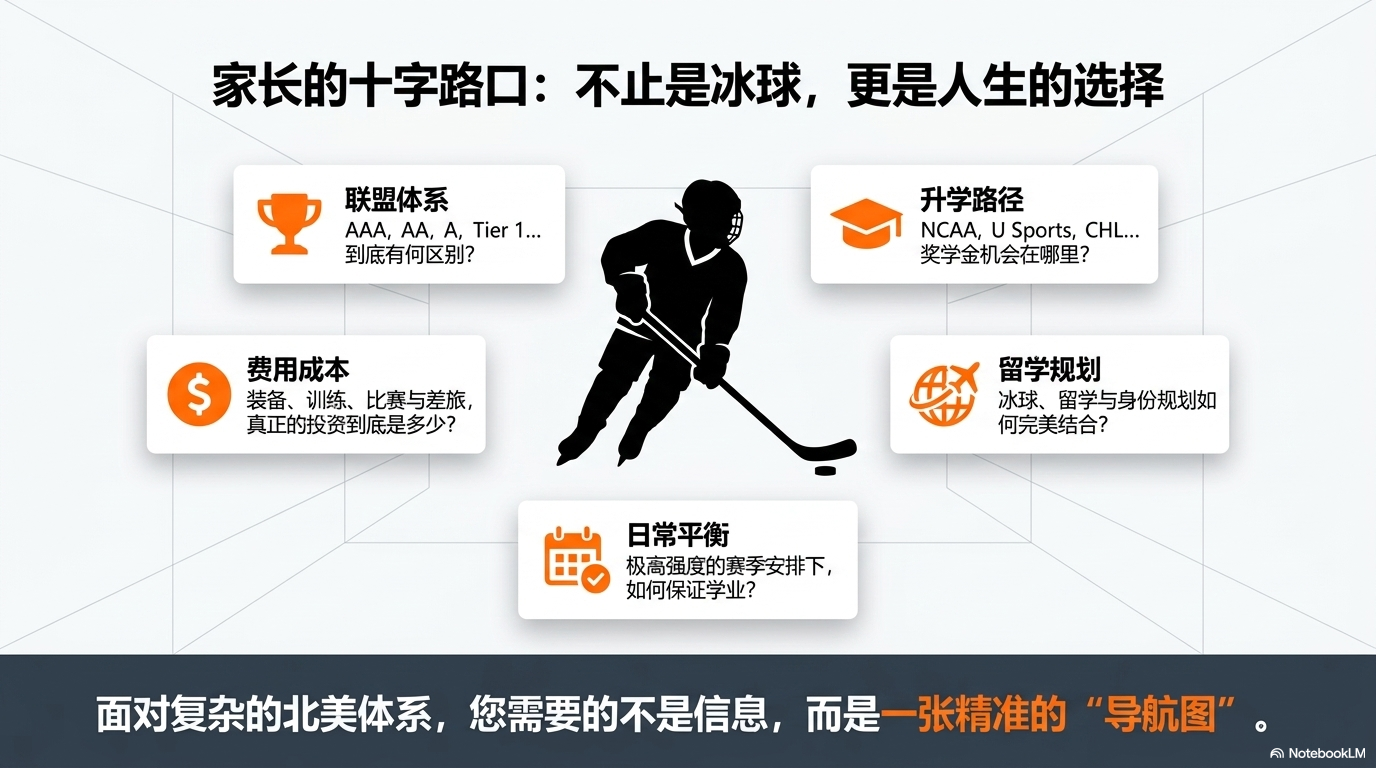
This guide grew out of T-Rex Hockey’s 2026 public seminar for hockey families. The illustrations preserve the seminar context; confirm birth-year cutoffs, fees, league rules and eligibility for the season you are planning.

View the slide and handbook figures
Chinese seminar slide on league choices, college, costs, study abroad and everyday life
2026 North American Youth Hockey Pathways seminar, slide 2: the decisions families face.
English seminar map of Canadian and U.S. youth, junior and college options
Hockey Pathway Guide, page 2. Ages and groupings are seminar examples.

Check the season you are planning for